
Six Core Capabilities
From active ingredient discovery to human clinical validation — every link is backed by in-house methods and instruments, with no break point that requires outsourcing to a third party.
Active Ingredient Discovery
AI-Powered Active Ingredient Identification — from plant library to candidate molecule, compressed into a practical timeframe.
Plant Resource Library
Over 10,000 plant extracts systematically catalogued and characterized for bioactive potential.
Natural Product Library
A curated collection of bioactive compounds enabling comprehensive natural-source screening.
High-Throughput Screening
AI-accelerated compound evaluation platform capable of processing thousands of candidates in parallel.
AI Bioactivity Prediction
Machine-learning models that predict activity profiles and accelerate lead identification.
Delivery Engineering — Five Core Technologies
Actives with different physicochemical properties need different delivery strategies. We hold five routes in parallel and select by molecule, not by whatever product happens to be on the shelf.
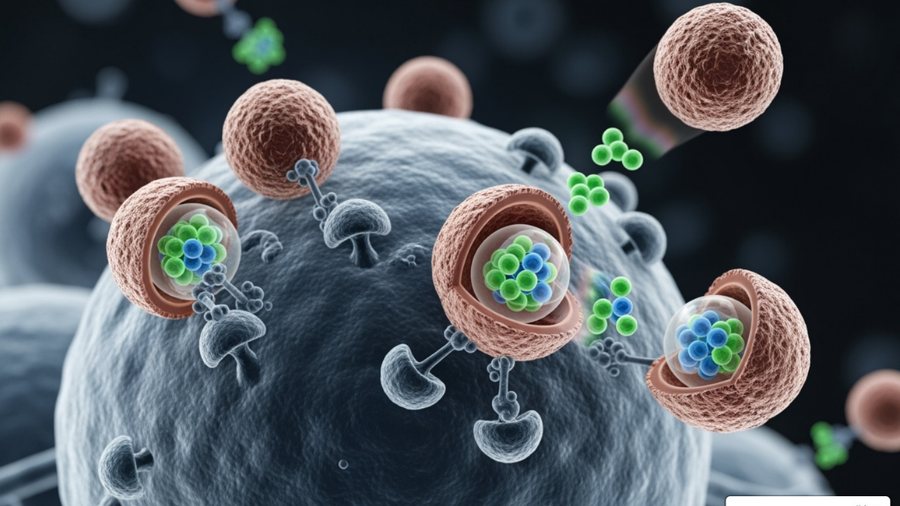
Liposome
50–200 nm · >85% EE
Phospholipid bilayer encapsulation, suitable for both hydrophilic and hydrophobic actives, with excellent biocompatibility.
Nanoemulsion
<200 nm
Oil-in-water nanoemulsion systems with droplet size below 200 nm, significantly improving oral bioavailability.
Microcapsule
Controlled release
Polymeric shell protection for sensitive actives, delivering precise, controllable release kinetics.
Solid Dispersion
Enhanced dissolution
Amorphous drug–polymer matrix systems that markedly increase the dissolution rate of poorly soluble actives.
Targeted Delivery
Receptor-mediated
Receptor-mediated active targeting that delivers actives precisely to specific tissues and cells.
Liposome Specifications
Particle size 50–200 nm Encapsulation efficiency >85%
Bioavailability improvement Up to 8×
Absorption Prediction Platform
Quantifying how actives behave in the human body — full-spectrum evaluation of in-vitro permeability, solubility and release.
| Model | Description |
|---|---|
| PAMPA | Passive transcellular permeability prediction, rapidly assessing membrane permeation and oral absorption potential. |
| Caco-2 | Intestinal epithelial cell absorption model — the industry gold standard for simulating the human intestinal absorption barrier. |
| DHGI Dynamic GI Model | Physiologically relevant dynamic gastrointestinal simulation reproducing absorption kinetics during digestion. |
| Release (In Vitro) | In-vitro release profiling in biorelevant media to inform formulation optimization. |
| Solubility | Thermodynamic and kinetic solubility characterization, predicting dissolution behaviour and the upper limit of bioavailability. |
Gold-standard platform — a complete absorption prediction chain from in vitro to in vivo.
Translational Pharmacology Platform
Bridging in-vitro science to in-vivo performance and human clinical outcomes.
In-Vitro Platform
PK — Pharmacokinetics: plasma concentration–time curve analysis
PD — Pharmacodynamics: dose–response relationship modelling
ADME: full characterization of absorption, distribution, metabolism and excretion
DMPK: integrated drug metabolism and pharmacokinetics analysis
In-Vivo Translation Platform
Allometric Scaling: predicting human doses from animal data
PBPK Modelling: physiologically based pharmacokinetic models supporting clinical translation
Biomarker Discovery and Validation: confirming efficacy and safety biomarkers
Regulatory Submission Support: pharmacological documentation for IND / NDA filings
Clinical Evidence Platform
A complete evidence chain from in-vitro models to human validation — most peers stop at in-vitro evaluation; we connect the whole path through to human clinical studies.
In-Vitro Predictive Models
- PAMPA-X100
- Caco-2
- DHGI dynamic GI
- Solubility
- Release profile
Animal Pharmacology
- Animal PK / PD
- ADME characterization
- Safety assessment
Human Clinical Validation
- Clinical bioavailability studies
- Human PK
- Efficacy endpoints
- Hospital collaboration
Commercial Landing
- Regulatory dossier
- Commercial formulation
- Brand differentiation
Hospital-Based Clinical Research
Human efficacy validation studies conducted with medical institutions.
Professional Medical Team
A medical team involved in protocol design and interpretation of results.
GCP-Compliant Execution
Studies executed in accordance with Good Clinical Practice.
AI-Driven R&D Platform
Where Molecules Meet Intelligence.
AI-Driven Formulation Design
Machine-learning models predict optimal delivery-system parameters, shortening development time and accelerating time to market.
Digital-Twin GI Simulation
Virtual human gastrointestinal modelling to complete absorption prediction before any physical experiment is run.
Bioavailability Predictive Modelling
QSAR models linking molecular structure to bioavailability outcomes, supporting data-driven formulation decisions.
Testing Service Capabilities
Beyond the modules above, we operate established testing and experimental services spanning in-vitro, cell, animal and mass-spectrometry work.
Six Experimental Platforms
In-Vitro Permeation Testing
In-vitro permeation, diffusion and absorption testing on food and cosmetic ingredients or formulations, rapidly assessing permeability, mechanism and diffusion rate.
Cell Platform
Efficacy evaluation and mechanistic studies on a range of cell models, with flow cytometry analysis and sorting.
Animal Platform
In-vivo efficacy assessment, mechanistic studies and bioavailability testing for cosmetic and food ingredients and formulations.
Zebrafish Platform
Efficacy evaluation, mechanistic studies and safety assessment using zebrafish as the model organism.
Mass Spectrometry Platform
Metabolomics, lipidomics, drug metabolism and plant extract compositional analysis.
Gut Microbiome Testing
Microbiome health profiling supported by a molecular testing platform and an in-house adult gut microbiome database.
In-Vitro Models by Barrier
| Barrier | Model |
|---|---|
| Transdermal absorption | Diffusion cell model (excised skin): receptor fluid sampled at intervals, actives quantified to calculate permeation rate and characterize penetration behaviour. |
| Intestinal absorption | PAMPA; Caco-2 cell model (simulating the small intestinal epithelium); in-vitro digestion system (simulating oral, gastric and small-intestinal pH, enzymes, bile salts, temperature and peristalsis). |
| Blood–brain barrier | PAMPA-BBB; Transwell cell model (barrier integrity verified by transepithelial electrical resistance and tight-junction protein expression). |
| Baseline assays | In-vitro release testing (rate and extent); solubility testing (in various solvents, to predict absorption potential). |
Mass Spectrometry and Molecular Testing
Mass Spectrometry
Targeted and untargeted metabolomics, lipidomics and identification of traditional Chinese medicine constituents. Instrumentation includes Thermo Scientific TSQ Altis, Agilent 6545-QTOF LC/MS and Thermo Scientific TSQ Quantis.
Sequencing and Molecular Testing
Amplicon sequencing (18S / ITS / 16S) and metagenomic sequencing; QT120 isothermal fluorescent PCR detector and QT260 rapid real-time quantitative fluorescent PCR detector.
Cell Experimental Services
Built on flow cytometry analysis and sorting: experimental design, cell staining, cell harvesting, image processing and interpretation of results.
Animal Experimental Services
In-vivo optical imaging in small animals, behavioural analysis (learning / anxiety / nociception / locomotion / fear), experimental animal metabolism monitoring and physiological and biochemical analysis.
Clinical Testing Panels
Sleep Rhythm Panel
Melatonin ×4 time points and cortisol ×4 time points; includes poor-sleep screening and neuroendocrine testing.
Oxidative Stress Panel
Antioxidant capacity (reduced / oxidized / total glutathione) and oxidative damage markers (8-OHdG, 8-hydroxyguanosine, F2-isoprostanes, creatinine).
NAD+ Panel
NAD+ content (3 analytes) or NAD+ metabolism (8 analytes: NAD+, NADH, NAD+/NADH, TRP, NA, NR and others).
Neurotransmitter Panel
Over 30 neurotransmitters and related metabolites for health management and diagnostic support.
Gut Microbiome Panel
One-stop testing, comparison and analysis, accurately profiling adult gut microbiome health.
Metabolite Panel
Multi-analyte analysis for metabolic and nutritional research.
What It Looks Like On The Bench
Every capability above ends up in a concrete setting — cells, samples, data, and a team that draws the conclusion.


Tell us your ingredient and your goal
We will map out the corresponding delivery route, evaluation models and validation plan.